Showing posts with label Research. Show all posts
Showing posts with label Research. Show all posts
Sunday, 2 March 2014
Past Student Thriller Analysis
There are many things in which good openings of a thriller need to keep their audiences attention. These are things like music, action scenes, voice overs, etc. These effects will grip the audience and make them want to watch more of a film, which is why a good opening needs to involve these aspects.
In this past student's thriller opening, it starts off with a girl walking along a path, seeming very happy. The music playing in the background builds the tension and lets you know that something is going to happen. There was no dialogue in the opening, but that built up the suspense more, which would make the audience want to watch more of the film to see what happens. Although there was no dialogue, there was still diagetic and on-screen sounds, which was the mobile phone ringing on the girl's bed, for her boyfriend, we know for it came up on the screen of the phone, was calling her. I would want to watch more of it for it has a great name which relates to the opening, and I would want to know what happens next in the film, whether the boyfriend tries to save her or if he was in on the kidnapping, what the kidnappers do and why they kidnapped her and whether she survives the film.
I think this opening to a thriller, Mortifer, was quite suspenseful and tension building for it starts off at a park with a guy talking to a girl over the phone, the music is playing throughout the opening which builds tension for you know that something is going to happen which will match the music's tone. The girl ends the call and puts her phone away. Then someone walks into the park and shoots the guy in the head, twice. We see the girl walking past the killer, and at first I assumed that she was a part of the killing, that she was a friend who betrayed a friend. But then she gets a call from an anonymous person with a disguised voice and she says who are you, and the disguised voice says you know who I am. Then the opening scene finishes with SEVEN MONTHS LATER. This makes the audience want to watch more of the film to see what happens later, how the girl knows the killer, how she was a part in the killing of the boy and whether she too will die. The scene includes diagetic and non-diagetic sounds and on-screen sounds when the gun shoots the boy and with the conversation between the girl and the anonymous voice.
I really liked this opening for a thriller. it starts off at a forest where a group of boys are going to camp. However, it looks like something is going to happen because they are mucking around and shouting. However, there is parts where the screen jolts, and black and white lines come across the screen as though signal is lost. The boys get drunk and fall asleep, but one of them needs to go to the toilet, and gets out of the tent. Someone then attacks him, and the rest of the boys go to see what happens, but they get attacked too. It then goes to the shot of a guy waking up in his bed, with his television on, talking about the missing boys. What i like about this is the effect of no signal, where the screen gets cut off by white and black lines, for it adds tension and suspense, thinking that something is going to happen. Throughout the opening, we see a clip of an eye, and then back to the forest where the boys were camping. near the end of the opening, it goes to a shot of the eye again, but this time we see whose eye it is. This is effective for it makes it look like a dream, but then it shows the television talking about the missing boys, which makes the audience wonder what that boy was actually seeing. This makes the audience want to watch more to see what happened to the group of boys, whether they would be found, and how that boy who was asleep could see what was happening.

Friday, 21 February 2014
Analysis of Studio Idents
Studio Idents are very important to films for they present who has created the film. The most popular idents have a nickname: The big six.
The big six are
The big six are
- 20th Century Fox
- Paramount
- Warner Bros. Pictures
- Universal
- Columbia
- Walt Disney Pictures
Wednesday, 12 February 2014
Research into certification
"The British Board of Film Classification is an independent, non-governmental body which has classified cinema films since it was set up in 1912 and videos/ DVDs since the Video Recordings Act was passed in 1984." - http://www.bbfc.co.uk/about-bbfc.
"In order to protect children from unsuitable and even harmful content in films and videos and to give consumers information they might need about a particular film or video before deciding whether or not to view it, the BBFC examines and age rates films and videos before they are released. This independent scrutiny prior to release ensures the highest possible level of protection and empowerment." - http://www.bbfc.co.uk/what-classification/how-does-classification-work.Here are a few types of certificates which are given to movies:
Suitable for all
Parental guidance
Cinema release suitable for 12 years and over
Video release suitable for 12 years and over
Suitable only for 15 years and over
Suitable only for adults
Adult works for licensed premises only
Monday, 10 February 2014
Editing
Editing is the process of examining all of the footage shot during the making of a film/programme and positioning it in the desired order.
There are two key areas to focus on with editing:
1. Speed of Editing- How long does each shot last?
2. Style of Editing- How each shot is joined to the next?
Speed of editing
In a film, each scene may last a few seconds, or it could continue for minutes, but the length of each sequence establishes the pace of the film moving the action along.
The speed of editing will help to figure out the mood of what is taking place on screen.
If the audience is to feel suspense and anxiety, the editing will be quick- the shots/scenes changing frequently. For example, in an action sequence.
In 'The Bourne Ultimatum,' the editing is very quick to try and keep up with all of the action taking place. This creates a tension/suspense throughout the scene to grab the audience's attention and capture all the action involved.
In 'James Bond- Quantum of Solace,' there is a slight contrast for it starts off slow and then gets faster when the fight scene shows, and once the fight is over, it returns to slow again.
If a relaxed mood is desired, the scenes last longer and change less frequently, for example in a romantic film, such as 'Sleepless in Seattle.'
A trailer for a film needs to pack in detail from throughout the film. Therefore the editing will be very fast.
In the 'Man in the iron mask,' there were 140 shots, give or take, throughout the trailer.
Scenes at the beginning of a film should be slower to introduce the main characters.
As the film progresses, scenes may become shorter as the editing cuts between two or more storylines at a time.
Style of Editing
This is how shots are linked together.
The movement from one shot to another is called a transition. Straight cut is the most common and "invisible" form of transition.
One shot moves instantaneously to the next without attracting the audience's attention.
Straight cuts help retain reality. they do not break the viewers suspension or disbelief.
Dissolves is fading one shot off the screen while another shot is fading in.
the audience will be able to see both scenes as the midpoint dissolves.
It is used if the film maker wants to show a connection between two characters, places or objects.

Fades is a gradual darkening or lightening of an image until it becomes black or white.
One shot will fade until only a black or white screen can be seen.
It is used to indicate the end of a particular section of time within the narrative. It can also show the passing of time.
In 'Citizen Kane,' there are good examples of fades, dissolves and straight cuts.
It starts off with the black screen and gradually fades into a sign that says 'No trespassing.' It then uses an unnoticeable straight cut from the differences of the gate, and then another one which fades into a medium shot of the gate, also showing part of the background, which is a castle. These shots are only in the first 30 seconds of the footage, not including the titles, which is quite effective because it grabs the audience's attention from the start.
Wipes is when one image is pushed off of the screen by another image. Images can be pushed left or right.
It is more common for the image to be pushed off the left-hand side as this movement is more consistent with the sense of time moving forward. Wipes are used to signal a movement between different locations that are experiencing the same time.
For example, wipes are used broadly in the 'Star Wars' films.
A jump cut is where the audience's attention is brought into focus on something very suddenly. This occurs by breaking the continuity editing, which is known as discontinuity.
It appears as if a section of the sequence has been removed.
In the film 'Breathless,' the gap in action (when Seberg picked up the mirror) is emphasised by the use of a jump cut. It is used to startle the viewer and draw attention to something.

The filmmaker can choose to place shots in a certain order so as to create a smooth visual transfer from one frame to the next.
When two consecutive shots are matched in the terms of the way they look this is called a graphic match.
In 'A Space Odyssey,' there is a graphic match shown from where the bone is thrown and turns into an object in space.
Montage editing contains many different images, quickly edited together. Images do not provide a sense of the narrative moving forward, but are still full of meaning.
Rapid cuts force the viewer to consider the connections between the images being shown. There may be no obvious connections or they might be deliberately unconnected.
They are often used to reflect chaos, tension or disturbance, a characters state of mind perhaps. They might have an overall thematic or visual connection.
In 'Team America: World Police,' there is a good example of a montage.
Continuity editing retains a sense of realistic chronology and generates the feeling that time is moving forward.
It may use flashbacks or flash forwards but the narrative will still be seen to be progressing forward in an expected or realistic way.
Eye line match is when we see a character looking at something off screen and then we cut to a shot of what they are looking at.
Match on action is when we see a character start an action in one shot and then we see them continue it in the next shot.


The 180 degree rule is a basic guideline that states that two characters (or other elements) in the same scene should always have the same left/right relationship to each other.
If the camera passes over the imaginary axis connecting the two subjects, it is called crossing the line.

Shot/Reverse shot is used to show conversations/arguments.

There are two key areas to focus on with editing:
1. Speed of Editing- How long does each shot last?
2. Style of Editing- How each shot is joined to the next?
Speed of editing
In a film, each scene may last a few seconds, or it could continue for minutes, but the length of each sequence establishes the pace of the film moving the action along.
The speed of editing will help to figure out the mood of what is taking place on screen.
If the audience is to feel suspense and anxiety, the editing will be quick- the shots/scenes changing frequently. For example, in an action sequence.
In 'The Bourne Ultimatum,' the editing is very quick to try and keep up with all of the action taking place. This creates a tension/suspense throughout the scene to grab the audience's attention and capture all the action involved.
In 'James Bond- Quantum of Solace,' there is a slight contrast for it starts off slow and then gets faster when the fight scene shows, and once the fight is over, it returns to slow again.
A trailer for a film needs to pack in detail from throughout the film. Therefore the editing will be very fast.
In the 'Man in the iron mask,' there were 140 shots, give or take, throughout the trailer.
Scenes at the beginning of a film should be slower to introduce the main characters.
As the film progresses, scenes may become shorter as the editing cuts between two or more storylines at a time.
Style of Editing
This is how shots are linked together.
The movement from one shot to another is called a transition. Straight cut is the most common and "invisible" form of transition.
One shot moves instantaneously to the next without attracting the audience's attention.
Straight cuts help retain reality. they do not break the viewers suspension or disbelief.
Dissolves is fading one shot off the screen while another shot is fading in.
the audience will be able to see both scenes as the midpoint dissolves.
It is used if the film maker wants to show a connection between two characters, places or objects.
Fades is a gradual darkening or lightening of an image until it becomes black or white.
One shot will fade until only a black or white screen can be seen.
It is used to indicate the end of a particular section of time within the narrative. It can also show the passing of time.
In 'Citizen Kane,' there are good examples of fades, dissolves and straight cuts.
Wipes is when one image is pushed off of the screen by another image. Images can be pushed left or right.
It is more common for the image to be pushed off the left-hand side as this movement is more consistent with the sense of time moving forward. Wipes are used to signal a movement between different locations that are experiencing the same time.
For example, wipes are used broadly in the 'Star Wars' films.
A jump cut is where the audience's attention is brought into focus on something very suddenly. This occurs by breaking the continuity editing, which is known as discontinuity.
It appears as if a section of the sequence has been removed.
In the film 'Breathless,' the gap in action (when Seberg picked up the mirror) is emphasised by the use of a jump cut. It is used to startle the viewer and draw attention to something.

The filmmaker can choose to place shots in a certain order so as to create a smooth visual transfer from one frame to the next.
When two consecutive shots are matched in the terms of the way they look this is called a graphic match.
In 'A Space Odyssey,' there is a graphic match shown from where the bone is thrown and turns into an object in space.
Montage editing contains many different images, quickly edited together. Images do not provide a sense of the narrative moving forward, but are still full of meaning.
Rapid cuts force the viewer to consider the connections between the images being shown. There may be no obvious connections or they might be deliberately unconnected.
They are often used to reflect chaos, tension or disturbance, a characters state of mind perhaps. They might have an overall thematic or visual connection.
In 'Team America: World Police,' there is a good example of a montage.
It may use flashbacks or flash forwards but the narrative will still be seen to be progressing forward in an expected or realistic way.
Eye line match is when we see a character looking at something off screen and then we cut to a shot of what they are looking at.
Match on action is when we see a character start an action in one shot and then we see them continue it in the next shot.
The 180 degree rule is a basic guideline that states that two characters (or other elements) in the same scene should always have the same left/right relationship to each other.
If the camera passes over the imaginary axis connecting the two subjects, it is called crossing the line.
Shot/Reverse shot is used to show conversations/arguments.
Monday, 3 February 2014
Research into title sequences
Title sequences are very important for the opening of films for they present who is starring in the movie, who the production/distribution companies are and the makers of the movie, such as the director and the editor.
After the name of the film appears on the screen, the music turns into thrilling and exciting music, which anticipates a chase or action of some sort.
Sunday, 22 December 2013
Collateral Analysis

The plot is about a cab driver who finds himself the hostage of an engaging contract killer as he makes his rounds from hit to hit during one night in Los Angeles. He must find a way to save both himself and one last victim.

Thursday, 19 December 2013
No Country For Old Men Analysis

This is effective for if the movie contains famous actors then people would want to watch it for them.
I think that the target audience is around late 20's to early 30's for the actors are middle aged and they may have more interest from audience around 20-30 instead of younger adults/ children.
Also, the movie may have an age restriction on the film, for it contained some scenes of violence, which would prevent people who are not of that age to watch the movie.
No Country For Old Men is an American crime thriller. It tells a story of an ordinary man in which chance delivers a fortune that is not his.
It shows a cat and mouse chase where three men cross each other's path in the desert landscape of 1980 West Texas. The film shows themes such as circumstance and fate whilst still following the villain driven plot.
The villain is called Anton Chigurh, and he is a hired hit man who shows no remorse or compassion for other people. He seems to gain satisfaction and enjoyment from killing and creating fear amongst others, which adds to the film's tension. This is shown when Anton pays for his gas and flips a coin for the innocent shop owner to decide his fate.
His main weapon is a captive bolt pistol which he uses to kill people and shoot out locked doors. We as an audience know little about him due to his lack of speech. This creates a sense of uneasiness for we do not know his backstory or why he is chasing Llewellyn and killing innocent bystanders. It also makes him a very mysterious character for we know nothing about him.
The effect of the voiceover of the Sheriff is quite nerve racking for you want to know who the speaker is, why he is talking about his past and how it will fit into the film.
The lighting is quite dark, such as the settings and the costumes, which bring uneasiness to the audience and it makes the opening sequence frightening, which causes the audience to feel as though the movie is going to be scary.
We see the villain of the movie straight away in the opening scene, which shows how he is going to be a main part in this film.
Tuesday, 10 December 2013
Lighting
Lighting is an important aspect in film.
There are many different types of lighting in film.
The Key Light is the brightest and most influential
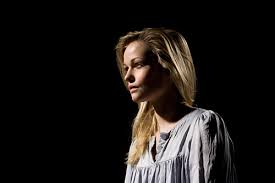


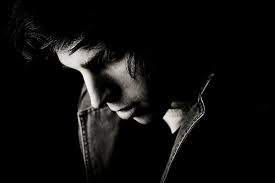

There are many different types of lighting in film.
The Key Light is the brightest and most influential
The Back Light helps counteract the effect of the key light and creates an outline or silhouette
The Filler Light helps to soften the harsh shadows that the use of key and back lights create
Lighting Source
Under lighting is when the main source comes from below the subject. It is usually used in thrillers and horror films
Top Lighting is when the main source of lighting comes from above- highlighting the features. It is used to create a glamorous look.
Back Lighting is when the source is behind the subject. If no other lighting is used, silhouettes are created.
Lighting: Low-Key and High-Key
Low-Key lighting is created by using only the key and back lights. This will produce a sharp contrast of light and dark areas on the screen as very deep, distinct shadows are formed.
It is known as Chiaroscuro, which is Italian for light- chiaro, and dark- obscuro.
Low Key Lighting
High-Key Lighting
More filler lights are used in high-key lighting. It makes the lighting seem realistic.
Saturday, 7 December 2013
Sound
Sound is used in every aspect of filming. The sound can either be Diagetic or Non-Diagetic.
Diagetic sound refers to the world of the text, such as things like dialogue, sound effects, music with a source within the text, e.g. a radio.
Non-Diagetic refers to everything outside the world of the text, such as things like voice-overs, soundtrack, captions, titles, subtitles.
On screen sound is when the audience can see the source of the sound.
Off screen sound is when the audience can't see the source of the sound. Also, the sound enables the extension of the diagetic world.
In Mary Shelley's Frankenstein, diagetic sound is shown when the creator is bringing Frankenstein to life, with the explosions and when he is trying to bring him to life, the creator shouts "Live!"
Non-Diagetic sound is shown through the soundtrack that is playing in the background when the process of Frankenstein being brought to life is happening.
On-Screen sound is shown in the explosions of the machines bringing Frankenstein to life.
Diagetic sound refers to the world of the text, such as things like dialogue, sound effects, music with a source within the text, e.g. a radio.
Non-Diagetic refers to everything outside the world of the text, such as things like voice-overs, soundtrack, captions, titles, subtitles.
On screen sound is when the audience can see the source of the sound.
Off screen sound is when the audience can't see the source of the sound. Also, the sound enables the extension of the diagetic world.
Non-Diagetic sound is shown through the soundtrack that is playing in the background when the process of Frankenstein being brought to life is happening.
On-Screen sound is shown in the explosions of the machines bringing Frankenstein to life.
Parallel
Parallel sound is when the sound matches the action.
Contrapuntal
Contrapuntal sound is when the sound does not match the action.
Sound Bridge
A sound bridge helps create a smooth transition between two different scenes.
Friday, 6 December 2013
Mise-en-scene
Mise-en-scene (pronounced meez-un-sen) means everything that is seen in the frame.
There are 5 elements of mise-en-scene. These are:
1- Settings and props.
2- Costume, hair and makeup.
3- Facial expressions and body language.
4- Lighting and colour.
5- Positioning of the characters and objects in the frame.
Settings and props.
The setting is where a media text takes place. Settings and locations play a vital role in film making and they are not just backgrounds. Sets are either built from scratch or a great deal of time is spent searching for a suitable setting which already exists. Settings can manipulate an audience by building expectations and then doing something completely different.
In a Science Fiction film, you will most likely find something abnormal, so things like Aliens, spaceships, galactic space stations. In a romance, you wold most likely find bright colours in the house or set, maybe some flowers, maybe a bench, so if it was set in a park, you would find trees, a bench, ducks in a pond, couples walking around, people walking their dogs and so on.


Costume, hair and makeup
Certain costumes define a character, such as a black cloak for a vampire.
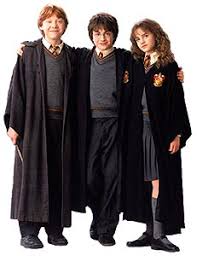
Costumes can be quite stylized, dragging attention to their graphic qualities. Costumes are carefully set up to match the character's personality, so each character is different and you can understand the character just from what they are wearing. sometimes costumes are necessary, so like in a film about a school, the students need to wear uniform or a certain rule of clothing. Like in Harry Potter, the students wear a black robe, black trousers/skirt, a white shirt, a tie and/or scarf with the colours of their school house. So Harry is a gryffindor, he would wear a red and gold tie and a red and gold scarf. he couldn't ever be seen wearing green because that is Slytherin and so the audience would become confused. This is when costumes are vital to being correct.
All actors wear makeup for the camera, even if it is subtle and unnoticeable. it is designed to make them look their best. Also, it is very hot behind the camera for there are many lights on the actor, and so the makeup is specially designed to make sure the actor does not sweat or feel clammy. Make-up can be used in extreme forms as well, such as hiding traumatic wounds or even transforming an actor into an alien or abnormal creature. For example, in The Hobbit, there are many special effects and facial parts to make the actors look like actual dwarfs, so the makeup was used for facial features, noses and even wrinkles.


Positioning of the characters and objects in the frame
There are many ways a director can use positioning in the frame. If a director chooses to position a character or object in the foreground of a shot, then the audience should think that the character/object is of importance.
A moving character/object positioned against a stationary background will immediately draw the audiences attention, as it would in real life.
If characters/objects are positioned evenly in the frame, then it will give a very balanced feel to the frame, but if all of the characters were at one end of the frame then it would appear as unbalanced.
The director can also use positioning to indicate relationships. So if a couple are arguing, they will be positioned on either two of the outside corners of the frame so there is a lot of physical distance between them. This reflects the emotional distance they are feeling at this point.
Whereas, if a couple have just married, they will be close to each other in a romantic place, mostly in the middle of the frame so that they are the center of attention.


A denotation is the literal description of an idea, concept and object. Denotations are a particular wavelength of the electromagnetic spectrum.
Connotation is what we associate with a particular idea, concept or object. Connotations are things like anger, danger, romance, blood etc.
There are 5 elements of mise-en-scene. These are:
1- Settings and props.
2- Costume, hair and makeup.
3- Facial expressions and body language.
4- Lighting and colour.
5- Positioning of the characters and objects in the frame.
Settings and props.
The setting is where a media text takes place. Settings and locations play a vital role in film making and they are not just backgrounds. Sets are either built from scratch or a great deal of time is spent searching for a suitable setting which already exists. Settings can manipulate an audience by building expectations and then doing something completely different.
In a Science Fiction film, you will most likely find something abnormal, so things like Aliens, spaceships, galactic space stations. In a romance, you wold most likely find bright colours in the house or set, maybe some flowers, maybe a bench, so if it was set in a park, you would find trees, a bench, ducks in a pond, couples walking around, people walking their dogs and so on.
Costume, hair and makeup
Certain costumes define a character, such as a black cloak for a vampire.
Costumes can be quite stylized, dragging attention to their graphic qualities. Costumes are carefully set up to match the character's personality, so each character is different and you can understand the character just from what they are wearing. sometimes costumes are necessary, so like in a film about a school, the students need to wear uniform or a certain rule of clothing. Like in Harry Potter, the students wear a black robe, black trousers/skirt, a white shirt, a tie and/or scarf with the colours of their school house. So Harry is a gryffindor, he would wear a red and gold tie and a red and gold scarf. he couldn't ever be seen wearing green because that is Slytherin and so the audience would become confused. This is when costumes are vital to being correct.
All actors wear makeup for the camera, even if it is subtle and unnoticeable. it is designed to make them look their best. Also, it is very hot behind the camera for there are many lights on the actor, and so the makeup is specially designed to make sure the actor does not sweat or feel clammy. Make-up can be used in extreme forms as well, such as hiding traumatic wounds or even transforming an actor into an alien or abnormal creature. For example, in The Hobbit, there are many special effects and facial parts to make the actors look like actual dwarfs, so the makeup was used for facial features, noses and even wrinkles.
Facial expressions
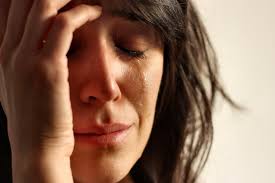
Facial expressions show how someone is feeling. An audience can easily tell the difference between whether someone is happy or upset just by their facial expressions in movies. Small changes can send out different signals, so if an actor is smiling broadly, then the audience can gather that he is very happy. But if he continues that smile for a very long time then the audience will notice that something is wrong because it is not normal behavior.
Eyes are very important signals to show us someone's expression, and it is usually used to help the audience follow the direction of the actor's sight. So if a director wants to draw attention to a feature, they can make the audience focus on someone or something in the frame.
Also, the way we move and hold our bodies indicate our thoughts and feelings. Like facial expressions, everyone is different, but there are other things to show our feelings, such as shaking a fist at someone to show anger or crouching down into a ball to protect ourselves.
Lighting and color
Lighting and color help to create mood and atmosphere. These elements can guide an audiences attention by lighting up an object. A director can use shadows to create suspense and tension by obscuring an object from the audience. Using bright and dark light can create an effect of confusion. The connotations created by the colours can be used to support the mood, such as red for anger. So in 'We Need To Talk About Kevin,' it all starts off with blood red colours and bright red colours, it starts in a tomato festival, which could show that there is something bad about this movie and something terrible will happen.
Positioning of the characters and objects in the frame
There are many ways a director can use positioning in the frame. If a director chooses to position a character or object in the foreground of a shot, then the audience should think that the character/object is of importance.
A moving character/object positioned against a stationary background will immediately draw the audiences attention, as it would in real life.
If characters/objects are positioned evenly in the frame, then it will give a very balanced feel to the frame, but if all of the characters were at one end of the frame then it would appear as unbalanced.
The director can also use positioning to indicate relationships. So if a couple are arguing, they will be positioned on either two of the outside corners of the frame so there is a lot of physical distance between them. This reflects the emotional distance they are feeling at this point.
Whereas, if a couple have just married, they will be close to each other in a romantic place, mostly in the middle of the frame so that they are the center of attention.

A denotation is the literal description of an idea, concept and object. Denotations are a particular wavelength of the electromagnetic spectrum.
Connotation is what we associate with a particular idea, concept or object. Connotations are things like anger, danger, romance, blood etc.
Sunday, 24 November 2013
Source Code Analysis

Source code is all bout a soldier who wakes up in the body of an unknown man only to find out that he is part of a mission to track down the bomber of a Chicago commuter train.
It stars Jake Gyllenhaal, Michelle Monaghan and Vera Farmiga.
"Change the past. Save the future."One review of the film is:
"The story line keeps you on the edge of your seat and adds in enough humour to make it a thoroughly enjoyable experience.
There is amazing, subtle chemistry between Jake (Colter Stevens) and Michelle (Christina Warren) which really is the star of the film, performances by all the actors are excellent."
I totally agree with this review. I think Source Code is a great film and there was never a part of the film that was boring. It kept you on the edge of your seat wondering what was going to happen next.
Also, the movie contains some romance. It is not only an action film, but also it contains chemistry between the Colter and Christina. This encourages a female audience to watch the film as well as a male audience.
Another reviewer's opinion:
"Beautiful cinematography that will make Chicago proud.
An enigmatic ending that brings up more questions than answers but it feels right.
This film delivers on romance, suspense, mystery and thrills. Highly recommended."
In my opinion, the ending of the film was perfect. But yes, it did leave more questions than answers, such as whether the passengers on the train survived or not, whether Jake stayed in the body of the unknown man or if Colter and Christina were in an imaginary world after Colleen (Vera Farmiga) turns off his life support.
The trailer is very effective for it contains certain parts of the movie that would appeal to the audience and get their attention. It gets their attention by using fast pacing action and it gets straight to the point so that people will know what the movie is about and they will want to watch it. It has been edited to build tension and show how exciting the film is. The target audience is 16-late 20's and it is a unisex audience, for even though there is action and it is a thriller, it also contains romance which would relate to girls.
The first official 5 minutes of the film is very exciting and tension building without any action, for Colter, who Christina keeps calling Sean, doesn't understand why he is on a train with all of these people and he doesn't know what is happening, which makes it very exciting for the audience because the audience then want to know what will happen next. At the end of the 5 minutes, the train blows up, including Colter, and the audience are shocked, which is why the first opening 5 minutes are so effective.
The train scenes were based around "Strangers on a train," (1951) and they wanted to create a kind of classic story about a relationship between two strangers that met on the train. This was also brought into the wardrobe, for Colter's (Jake Gyllenhaal) wardrobe was very normal; it was a casual suit that a man would wear almost everyday. They wanted to create a feeling that this could happen to normal, innocent people. They didn't use an actual train, although they wondered if they should or not. Instead, they used a sound stage, which was important because they revisited that event multiple times in the filming, it was integral to make it work and they didn't want the audience to get bored and so they filmed through the interior of the train and created platforms outside of the train.
There was an emotional phone call near the end of the film to present Colton's life before the source code. Colton died and was in the source code for a few months before he found out, and so it was important for him to talk to his dad, for he was talking about his dad throughout the film, which was why it was very emotional for the audience. Colton asks Christina "What would you do if you had 1 minute to live" and he answers it himself by saying "I would speak to my father," and it creates an emotional feeling for the audience. When he gets to talk to his father in the end, it's very teary for the audience because they know how important it is to Colter. It helps this thriller because it shows how ordinary he is. It shows that he isn't only an action hero, he isn't only a fighter, he is a normal man and he has feelings.
The ending of the film was very effective because throughout the film, Colter is stating about how he does not want to be a part of source code. But he realized how important Source code was, and that it could create a whole new world and save people. In the end, he tells Colleen that "if I'm right, then you have a capt. Colter Stevens waiting to send on a mission. Promise me you'll help him. And when you do, do me a favor; tell him everything is going to be okay." I think that the ending of this film shows that Colter changed his mind about the source code, and that he will continue to help with their work.
Wednesday, 6 November 2013
Film Noir


Film Noir was a term about a group of films made in Hollywood between 1941 to 1958. The term was created by French film critics.
These films are characterized by their dark, pessimistic themes that present the darker side of human nature.
These films are filmed using low-key lighting to give the films a sharp look with contrast between dark and light.
This type of film at no time misleads you into thinking that there will be a happy ending.
They are normally in locations that consist darkness, such as in the shadows, in alleys, in the back doors of fancy places, taxi drivers and bartenders are usually involved, and it is always at night when events occur.
The women in Film Noir movies will just as much kill you as love you, and vice versa.
Women would wear lipstick, low necklines, red dresses, high heels, elbow-length gloves and they would call the doorman by their first names, mix drinks, have gangsters as boyfriends and soft spots for private eyes.
Men would wear suits and ties, fedoras, living in shabby residential hotels with a neon sign flashing through the window. They are on first-name terms with homicide police, stop the little kids playing with the bad guys, driving cars with running boards and eating in all-night diners.
The movies were either shot in black and white, or they feel like they were.
It is known as the most American film genre, for it is the most unrealistic. No society could have created a world filled with so much fear, fate, doom and betrayal.

Sunday, 3 November 2013
Alfred Hitchcock

Sir Alfred Joseph Hitchcock was an English film director and producer. He was born on August 13, 1899 in Leytonstone and died on April 29, 1980 in Bel-Air, Los Angeles.
Hithcock made around about 53 films, but he also directed others, such as Aventure Malgache in 1944.
His most famous film was "Psycho," which was in black and white, for it contained the iconic shower scene in which many horrors nowadays owe a lot of their ideas to. This was also quite a shocking movie as well, for although it wasn't seen as Hitchcock's best film, it was the most famous and shocking. It was shocking for the fact that he killed off the supposed main character, Marion, about a third into the movie. The early death of the main character who was seen as the heroine, the violence of the shower scene and the many innocent lives destroyed by a disturbed murderer became Hitchcock's trademark, and was the reason why many other producer's and directors copied them for their own horror movies.

Hitchcock appeared briefly in his films, only slight glimpses though, easily missed, but it could show that these stories can happen in real life, and that is why it is so scary. He has a famous quote, that thrillers allow the audience "to put their toe in the cold water of fear to see what it's like," which could mean that the audience need to experience these kinds of thrillers so that they can expect them in everyday life, for they can happen any day, they are normal events that could happen to anybody at any time.
Alfred Hitchcock was harshly treated throughout his childhood, and those harsh treatments are reflected into his films. We see harsh treatment and wrongful accusations frequently in his films. For example, in The Birds, the leading lady is accused for starting the deadly attacks of the birds, and throughout the film, she was constantly attacked by the birds. However, even though Alfred Hitchcock inspired his own films, other films were inspired by his ideas. "What Lies Beneath" is a film that reminds the audience of Hitchcock's film "Rear Window," combining the murder mystery from that film and a may-or-may-not-be supernatural side. The protagonist, Michelle Pfeiffer, is a blonde heroine, the same as the women in Hitchcock films. Moreover, her husband was named Norman, which could be argued that he was named Norman after Norman Bates, from Hitchcock's film "Psycho," where Norman was the Psychopath.
Hitchcock even has his own style of movie, named Hitchcockian. Hitchcockian films are made with styles and themes similar to Alfred Hitchcock's. Some of these characteristics can be the platinum blonde woman, the domineering mother, an accusation of an innocent man, characters who switch sides or cannot be trusted, average people being thrust into dangerous situations and the use of MacGuffins or plot devices.

Subscribe to:
Posts (Atom)