Character Name: Officer Levine
|
|
Costume:
Suit
|
Props:
Notepad, Badge
|
Character Name: Mr Hunter
|
|
Costume:
Sportswear
|
Props:
Bat
|
Character Name: Emma Gilbert
|
|
Costume:
Green trousers, Coat
|
Props:
Duct tape, Rope
|
Friday, 13 December 2013
Costume and Props

Wednesday, 11 December 2013
Treatment
Treatment
|
Group Roles
Cinematography: Ropafadzo Mugadza
Mise-en-scene: Georgia Fortt
Sound: Kamie Rothon
Editing: Group effort
|
Title: Hunter
Tag Line: Finding a man who can turn
into anyone
|
Synopsis: a policeman arrives at a school, walks up to the reception
and asks for a teacher. The policeman then walks off to find the class. Once
he finds the class, he knocks and enters. A teacher is sitting at his desk,
and motions the policeman to sit down. The policeman enters, looks briefly
around the room and sits down. They have a conversation about a missing girl
who the teacher used to teach and whether he knows where she is. The teacher
ends the conversation by saying that he has to teach a class and asks the
policeman to leave. On the way out of the school, the policeman is knocked out, and we see someone drag him
away. We then see the person dragging the policeman into a cupboard, and the
light switches on, and we see the policeman in the room, along with a girl,
who is obviously the missing girl, and we then switch back to the teacher,
who was the person who dragged him into the cupboard.
|
Key Genre Conventions:
The protagonist is the policeman/detective trying
to solve the crime of the missing girl.
The genre gets into the psyche of the audience for
it is as though the audience is solving the crime, along with the policeman.
|
Tuesday, 10 December 2013
Lighting
Lighting is an important aspect in film.
There are many different types of lighting in film.
The Key Light is the brightest and most influential
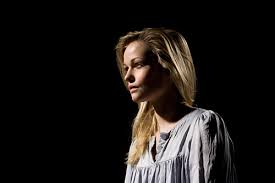


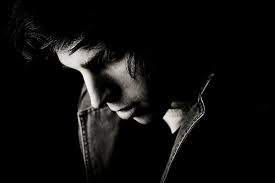

There are many different types of lighting in film.
The Key Light is the brightest and most influential
The Back Light helps counteract the effect of the key light and creates an outline or silhouette
The Filler Light helps to soften the harsh shadows that the use of key and back lights create
Lighting Source
Under lighting is when the main source comes from below the subject. It is usually used in thrillers and horror films
Top Lighting is when the main source of lighting comes from above- highlighting the features. It is used to create a glamorous look.
Back Lighting is when the source is behind the subject. If no other lighting is used, silhouettes are created.
Lighting: Low-Key and High-Key
Low-Key lighting is created by using only the key and back lights. This will produce a sharp contrast of light and dark areas on the screen as very deep, distinct shadows are formed.
It is known as Chiaroscuro, which is Italian for light- chiaro, and dark- obscuro.
Low Key Lighting
High-Key Lighting
More filler lights are used in high-key lighting. It makes the lighting seem realistic.
Saturday, 7 December 2013
Sound
Sound is used in every aspect of filming. The sound can either be Diagetic or Non-Diagetic.
Diagetic sound refers to the world of the text, such as things like dialogue, sound effects, music with a source within the text, e.g. a radio.
Non-Diagetic refers to everything outside the world of the text, such as things like voice-overs, soundtrack, captions, titles, subtitles.
On screen sound is when the audience can see the source of the sound.
Off screen sound is when the audience can't see the source of the sound. Also, the sound enables the extension of the diagetic world.
In Mary Shelley's Frankenstein, diagetic sound is shown when the creator is bringing Frankenstein to life, with the explosions and when he is trying to bring him to life, the creator shouts "Live!"
Non-Diagetic sound is shown through the soundtrack that is playing in the background when the process of Frankenstein being brought to life is happening.
On-Screen sound is shown in the explosions of the machines bringing Frankenstein to life.
Diagetic sound refers to the world of the text, such as things like dialogue, sound effects, music with a source within the text, e.g. a radio.
Non-Diagetic refers to everything outside the world of the text, such as things like voice-overs, soundtrack, captions, titles, subtitles.
On screen sound is when the audience can see the source of the sound.
Off screen sound is when the audience can't see the source of the sound. Also, the sound enables the extension of the diagetic world.
Non-Diagetic sound is shown through the soundtrack that is playing in the background when the process of Frankenstein being brought to life is happening.
On-Screen sound is shown in the explosions of the machines bringing Frankenstein to life.
Parallel
Parallel sound is when the sound matches the action.
Contrapuntal
Contrapuntal sound is when the sound does not match the action.
Sound Bridge
A sound bridge helps create a smooth transition between two different scenes.
Friday, 6 December 2013
Preliminary Task Evaluation
The story of our Preliminary Task that my group made was I walked into a room and Ropa was sitting at a table with a bag on the table. The bag was a MacGuffin and it had something important in it that I needed. We had a very serious conversation about how if i betrayed her and gave her the wrong codes for the bag, then she would kill me. We also had another MacGuffin, which was the codes that i needed to give Ropa in return for the bag. I gave her the code and she gave me the bag, and then i left. Just as i left, Ropa found out that it wasn't the right code, and i started running, where she then states "well, i guess I'll just have to kill her."
We included all of the listed editing techniques, which are Match on Action, Eye line Match, Shot, Reverse Shot and the 180 degree rule. We used the Match on Action when i walked through the door; at first Georgia filmed me from the outside of the classroom walking into the classroom, and then she filmed me from the inside of the classroom walking in, and we edited it together so it runs smoothly. We used the Eye line Match to show that I needed the bag. Georgia first filmed my eyes looking away, then she filmed the bag and then i spoke again. We used the Shot Reverse Shot whenever there was a conversation; Georgia would film me speaking, then Ropa speaking, and then me again, and etc. We would film over the shoulder of the non-speaking person so we could see the expressions of the speaker. We used the 180 degree rule by not using the 180 degree filming, which means that the characters were always in the small position whilst filming.
The first time we filmed, it didn't turn out very well, for we had forgotten to turn the microphone on, and so we had the filming, but with no sound. This meant that we had to film again, but at least the second time took less time for we knew what we was going to film and it turned out to be a good film. Also, we could have reduced the time of the stare . However each shot was filmed precisely and so we did not need a lot of editing for the filming was quite smooth. Next time, we could try to make sure the microphone is turned on so we wouldn't have to waste time filming the film again.
I think the most positive elements of our film is that the filming went very smoothly, there wasn't much editing to fix the film; i think that there was only one bit of the film that we needed to edit. Also, we had continuity, for we filmed for a day, and so we wore the same clothes.
Mise-en-scene
Mise-en-scene (pronounced meez-un-sen) means everything that is seen in the frame.
There are 5 elements of mise-en-scene. These are:
1- Settings and props.
2- Costume, hair and makeup.
3- Facial expressions and body language.
4- Lighting and colour.
5- Positioning of the characters and objects in the frame.
Settings and props.
The setting is where a media text takes place. Settings and locations play a vital role in film making and they are not just backgrounds. Sets are either built from scratch or a great deal of time is spent searching for a suitable setting which already exists. Settings can manipulate an audience by building expectations and then doing something completely different.
In a Science Fiction film, you will most likely find something abnormal, so things like Aliens, spaceships, galactic space stations. In a romance, you wold most likely find bright colours in the house or set, maybe some flowers, maybe a bench, so if it was set in a park, you would find trees, a bench, ducks in a pond, couples walking around, people walking their dogs and so on.


Costume, hair and makeup
Certain costumes define a character, such as a black cloak for a vampire.
Costumes can be quite stylized, dragging attention to their graphic qualities. Costumes are carefully set up to match the character's personality, so each character is different and you can understand the character just from what they are wearing. sometimes costumes are necessary, so like in a film about a school, the students need to wear uniform or a certain rule of clothing. Like in Harry Potter, the students wear a black robe, black trousers/skirt, a white shirt, a tie and/or scarf with the colours of their school house. So Harry is a gryffindor, he would wear a red and gold tie and a red and gold scarf. he couldn't ever be seen wearing green because that is Slytherin and so the audience would become confused. This is when costumes are vital to being correct.
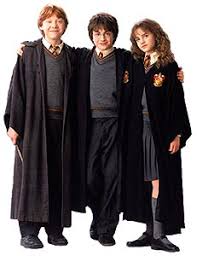
All actors wear makeup for the camera, even if it is subtle and unnoticeable. it is designed to make them look their best. Also, it is very hot behind the camera for there are many lights on the actor, and so the makeup is specially designed to make sure the actor does not sweat or feel clammy. Make-up can be used in extreme forms as well, such as hiding traumatic wounds or even transforming an actor into an alien or abnormal creature. For example, in The Hobbit, there are many special effects and facial parts to make the actors look like actual dwarfs, so the makeup was used for facial features, noses and even wrinkles.


Positioning of the characters and objects in the frame
There are many ways a director can use positioning in the frame. If a director chooses to position a character or object in the foreground of a shot, then the audience should think that the character/object is of importance.
A moving character/object positioned against a stationary background will immediately draw the audiences attention, as it would in real life.
If characters/objects are positioned evenly in the frame, then it will give a very balanced feel to the frame, but if all of the characters were at one end of the frame then it would appear as unbalanced.
The director can also use positioning to indicate relationships. So if a couple are arguing, they will be positioned on either two of the outside corners of the frame so there is a lot of physical distance between them. This reflects the emotional distance they are feeling at this point.
Whereas, if a couple have just married, they will be close to each other in a romantic place, mostly in the middle of the frame so that they are the center of attention.


A denotation is the literal description of an idea, concept and object. Denotations are a particular wavelength of the electromagnetic spectrum.
Connotation is what we associate with a particular idea, concept or object. Connotations are things like anger, danger, romance, blood etc.
There are 5 elements of mise-en-scene. These are:
1- Settings and props.
2- Costume, hair and makeup.
3- Facial expressions and body language.
4- Lighting and colour.
5- Positioning of the characters and objects in the frame.
Settings and props.
The setting is where a media text takes place. Settings and locations play a vital role in film making and they are not just backgrounds. Sets are either built from scratch or a great deal of time is spent searching for a suitable setting which already exists. Settings can manipulate an audience by building expectations and then doing something completely different.
In a Science Fiction film, you will most likely find something abnormal, so things like Aliens, spaceships, galactic space stations. In a romance, you wold most likely find bright colours in the house or set, maybe some flowers, maybe a bench, so if it was set in a park, you would find trees, a bench, ducks in a pond, couples walking around, people walking their dogs and so on.
Costume, hair and makeup
Certain costumes define a character, such as a black cloak for a vampire.
Costumes can be quite stylized, dragging attention to their graphic qualities. Costumes are carefully set up to match the character's personality, so each character is different and you can understand the character just from what they are wearing. sometimes costumes are necessary, so like in a film about a school, the students need to wear uniform or a certain rule of clothing. Like in Harry Potter, the students wear a black robe, black trousers/skirt, a white shirt, a tie and/or scarf with the colours of their school house. So Harry is a gryffindor, he would wear a red and gold tie and a red and gold scarf. he couldn't ever be seen wearing green because that is Slytherin and so the audience would become confused. This is when costumes are vital to being correct.
All actors wear makeup for the camera, even if it is subtle and unnoticeable. it is designed to make them look their best. Also, it is very hot behind the camera for there are many lights on the actor, and so the makeup is specially designed to make sure the actor does not sweat or feel clammy. Make-up can be used in extreme forms as well, such as hiding traumatic wounds or even transforming an actor into an alien or abnormal creature. For example, in The Hobbit, there are many special effects and facial parts to make the actors look like actual dwarfs, so the makeup was used for facial features, noses and even wrinkles.
Facial expressions
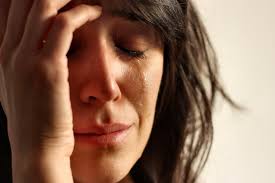
Facial expressions show how someone is feeling. An audience can easily tell the difference between whether someone is happy or upset just by their facial expressions in movies. Small changes can send out different signals, so if an actor is smiling broadly, then the audience can gather that he is very happy. But if he continues that smile for a very long time then the audience will notice that something is wrong because it is not normal behavior.
Eyes are very important signals to show us someone's expression, and it is usually used to help the audience follow the direction of the actor's sight. So if a director wants to draw attention to a feature, they can make the audience focus on someone or something in the frame.
Also, the way we move and hold our bodies indicate our thoughts and feelings. Like facial expressions, everyone is different, but there are other things to show our feelings, such as shaking a fist at someone to show anger or crouching down into a ball to protect ourselves.
Lighting and color
Lighting and color help to create mood and atmosphere. These elements can guide an audiences attention by lighting up an object. A director can use shadows to create suspense and tension by obscuring an object from the audience. Using bright and dark light can create an effect of confusion. The connotations created by the colours can be used to support the mood, such as red for anger. So in 'We Need To Talk About Kevin,' it all starts off with blood red colours and bright red colours, it starts in a tomato festival, which could show that there is something bad about this movie and something terrible will happen.
Positioning of the characters and objects in the frame
There are many ways a director can use positioning in the frame. If a director chooses to position a character or object in the foreground of a shot, then the audience should think that the character/object is of importance.
A moving character/object positioned against a stationary background will immediately draw the audiences attention, as it would in real life.
If characters/objects are positioned evenly in the frame, then it will give a very balanced feel to the frame, but if all of the characters were at one end of the frame then it would appear as unbalanced.
The director can also use positioning to indicate relationships. So if a couple are arguing, they will be positioned on either two of the outside corners of the frame so there is a lot of physical distance between them. This reflects the emotional distance they are feeling at this point.
Whereas, if a couple have just married, they will be close to each other in a romantic place, mostly in the middle of the frame so that they are the center of attention.

A denotation is the literal description of an idea, concept and object. Denotations are a particular wavelength of the electromagnetic spectrum.
Connotation is what we associate with a particular idea, concept or object. Connotations are things like anger, danger, romance, blood etc.
Sunday, 24 November 2013
Source Code Analysis

Source code is all bout a soldier who wakes up in the body of an unknown man only to find out that he is part of a mission to track down the bomber of a Chicago commuter train.
It stars Jake Gyllenhaal, Michelle Monaghan and Vera Farmiga.
"Change the past. Save the future."One review of the film is:
"The story line keeps you on the edge of your seat and adds in enough humour to make it a thoroughly enjoyable experience.
There is amazing, subtle chemistry between Jake (Colter Stevens) and Michelle (Christina Warren) which really is the star of the film, performances by all the actors are excellent."
I totally agree with this review. I think Source Code is a great film and there was never a part of the film that was boring. It kept you on the edge of your seat wondering what was going to happen next.
Also, the movie contains some romance. It is not only an action film, but also it contains chemistry between the Colter and Christina. This encourages a female audience to watch the film as well as a male audience.
Another reviewer's opinion:
"Beautiful cinematography that will make Chicago proud.
An enigmatic ending that brings up more questions than answers but it feels right.
This film delivers on romance, suspense, mystery and thrills. Highly recommended."
In my opinion, the ending of the film was perfect. But yes, it did leave more questions than answers, such as whether the passengers on the train survived or not, whether Jake stayed in the body of the unknown man or if Colter and Christina were in an imaginary world after Colleen (Vera Farmiga) turns off his life support.
The trailer is very effective for it contains certain parts of the movie that would appeal to the audience and get their attention. It gets their attention by using fast pacing action and it gets straight to the point so that people will know what the movie is about and they will want to watch it. It has been edited to build tension and show how exciting the film is. The target audience is 16-late 20's and it is a unisex audience, for even though there is action and it is a thriller, it also contains romance which would relate to girls.
The first official 5 minutes of the film is very exciting and tension building without any action, for Colter, who Christina keeps calling Sean, doesn't understand why he is on a train with all of these people and he doesn't know what is happening, which makes it very exciting for the audience because the audience then want to know what will happen next. At the end of the 5 minutes, the train blows up, including Colter, and the audience are shocked, which is why the first opening 5 minutes are so effective.
The train scenes were based around "Strangers on a train," (1951) and they wanted to create a kind of classic story about a relationship between two strangers that met on the train. This was also brought into the wardrobe, for Colter's (Jake Gyllenhaal) wardrobe was very normal; it was a casual suit that a man would wear almost everyday. They wanted to create a feeling that this could happen to normal, innocent people. They didn't use an actual train, although they wondered if they should or not. Instead, they used a sound stage, which was important because they revisited that event multiple times in the filming, it was integral to make it work and they didn't want the audience to get bored and so they filmed through the interior of the train and created platforms outside of the train.
There was an emotional phone call near the end of the film to present Colton's life before the source code. Colton died and was in the source code for a few months before he found out, and so it was important for him to talk to his dad, for he was talking about his dad throughout the film, which was why it was very emotional for the audience. Colton asks Christina "What would you do if you had 1 minute to live" and he answers it himself by saying "I would speak to my father," and it creates an emotional feeling for the audience. When he gets to talk to his father in the end, it's very teary for the audience because they know how important it is to Colter. It helps this thriller because it shows how ordinary he is. It shows that he isn't only an action hero, he isn't only a fighter, he is a normal man and he has feelings.
The ending of the film was very effective because throughout the film, Colter is stating about how he does not want to be a part of source code. But he realized how important Source code was, and that it could create a whole new world and save people. In the end, he tells Colleen that "if I'm right, then you have a capt. Colter Stevens waiting to send on a mission. Promise me you'll help him. And when you do, do me a favor; tell him everything is going to be okay." I think that the ending of this film shows that Colter changed his mind about the source code, and that he will continue to help with their work.
Subscribe to:
Posts (Atom)