There are two key areas to focus on with editing:
1. Speed of Editing- How long does each shot last?
2. Style of Editing- How each shot is joined to the next?
Speed of editing
In a film, each scene may last a few seconds, or it could continue for minutes, but the length of each sequence establishes the pace of the film moving the action along.
The speed of editing will help to figure out the mood of what is taking place on screen.
If the audience is to feel suspense and anxiety, the editing will be quick- the shots/scenes changing frequently. For example, in an action sequence.
In 'The Bourne Ultimatum,' the editing is very quick to try and keep up with all of the action taking place. This creates a tension/suspense throughout the scene to grab the audience's attention and capture all the action involved.
In 'James Bond- Quantum of Solace,' there is a slight contrast for it starts off slow and then gets faster when the fight scene shows, and once the fight is over, it returns to slow again.
A trailer for a film needs to pack in detail from throughout the film. Therefore the editing will be very fast.
In the 'Man in the iron mask,' there were 140 shots, give or take, throughout the trailer.
Scenes at the beginning of a film should be slower to introduce the main characters.
As the film progresses, scenes may become shorter as the editing cuts between two or more storylines at a time.
Style of Editing
This is how shots are linked together.
The movement from one shot to another is called a transition. Straight cut is the most common and "invisible" form of transition.
One shot moves instantaneously to the next without attracting the audience's attention.
Straight cuts help retain reality. they do not break the viewers suspension or disbelief.
Dissolves is fading one shot off the screen while another shot is fading in.
the audience will be able to see both scenes as the midpoint dissolves.
It is used if the film maker wants to show a connection between two characters, places or objects.
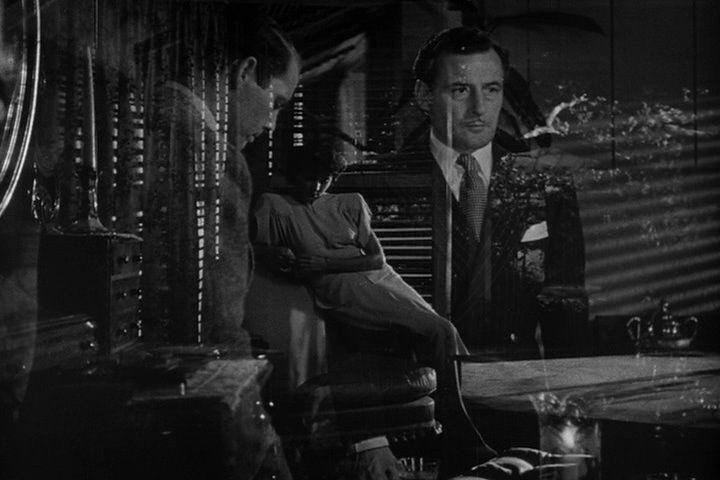
Fades is a gradual darkening or lightening of an image until it becomes black or white.
One shot will fade until only a black or white screen can be seen.
It is used to indicate the end of a particular section of time within the narrative. It can also show the passing of time.
In 'Citizen Kane,' there are good examples of fades, dissolves and straight cuts.
Wipes is when one image is pushed off of the screen by another image. Images can be pushed left or right.
It is more common for the image to be pushed off the left-hand side as this movement is more consistent with the sense of time moving forward. Wipes are used to signal a movement between different locations that are experiencing the same time.
For example, wipes are used broadly in the 'Star Wars' films.
A jump cut is where the audience's attention is brought into focus on something very suddenly. This occurs by breaking the continuity editing, which is known as discontinuity.
It appears as if a section of the sequence has been removed.
In the film 'Breathless,' the gap in action (when Seberg picked up the mirror) is emphasised by the use of a jump cut. It is used to startle the viewer and draw attention to something.

The filmmaker can choose to place shots in a certain order so as to create a smooth visual transfer from one frame to the next.
When two consecutive shots are matched in the terms of the way they look this is called a graphic match.
In 'A Space Odyssey,' there is a graphic match shown from where the bone is thrown and turns into an object in space.
Montage editing contains many different images, quickly edited together. Images do not provide a sense of the narrative moving forward, but are still full of meaning.
Rapid cuts force the viewer to consider the connections between the images being shown. There may be no obvious connections or they might be deliberately unconnected.
They are often used to reflect chaos, tension or disturbance, a characters state of mind perhaps. They might have an overall thematic or visual connection.
In 'Team America: World Police,' there is a good example of a montage.
It may use flashbacks or flash forwards but the narrative will still be seen to be progressing forward in an expected or realistic way.
Eye line match is when we see a character looking at something off screen and then we cut to a shot of what they are looking at.
Match on action is when we see a character start an action in one shot and then we see them continue it in the next shot.


The 180 degree rule is a basic guideline that states that two characters (or other elements) in the same scene should always have the same left/right relationship to each other.
If the camera passes over the imaginary axis connecting the two subjects, it is called crossing the line.

Shot/Reverse shot is used to show conversations/arguments.


No comments:
Post a Comment