Saturday, 5 April 2014

Friday, 4 April 2014
Evaluation question 7
This is Evaluation question 7, which is 'Looking back at your preliminary task, what do you feel you have learnt in the progression from it to the finished product?'
My skills have progressed since the making of my preliminary task, for I have learned skills such as how to edit successfully, how to create certain camera angles and shots to create an effect for the audience, and how to plan and create a film. I have learned to make sure I have continuity in my films, and make sure that I don't break the 180 degree rule. I have also learned how to effectively combine sound effects and music into my sound for my thriller, which creates tension and excitement for my audience. It also makes the film more professional for it does not only contain diagetic sound, but also a soundtrack.
In my preliminary task, we tried to create a plot behind the film whilst showing that we could create suspension by using techniques such as the McGuffin. In my thriller, we planned out the story effectively so that our audience would be interested in how the story continues, and we end the opening sequence on a cliff-hanger to create an anxious and suspense-building environment for the audience to wonder what will happen next? Will the kidnapper come back? Will they escape?
I have progressed with my use of different sounds, such as on and off-screen sounds, and diagetic and non-diagetic sound to create an effect on the audience. In my preliminary task, I had not familiar on how to incorporate sound into my editing, and so my preliminary task only contains diagetic, on-screen sounds, such as the dialogue and the door slam. However, in the progression to my thriller, I had made a sound exercise, where I incorporated a soundtrack and sound effects, so non-diagetic sound, into my editing, which lead to me becoming more familiar with how to combine different sounds into my editing, and so for my thriller, I have sound effects and background music to create tension and suspense for my audience.
I have also improved on my editing skills, for in the preliminary task, although there aren't noticeable mistakes in the editing, the editing is not eye-catching and suspense building. It is quite calm and simple. However, in my thriller, I have learned how to edit so that although there aren't many scenes of the protagonist walking through the corridor, it still looks like he has walked a long way to find where the suspect was. Also, I learned how to create a better scene to make my thriller look more professional, for a part of my footage was quite sloppy, and so I cut it precisely and created a black screen for a few seconds to look as though we could see that the protagonist had been knocked unconscious when he was hit over the head with a baseball bat.
Finally, I feel as though I have improved on my camera angles and shots for in my preliminary task, I was quite inexperienced with the use of a range of different camera angles and shots, and so I didn't use many in my preliminary. I used match on action, to show the character walking through the door, and an eye-line shot to present the McGuffin. However, in my thriller, I used many different camera angles and shots, such as a graphic match when the suspect walked out the door, it shot to the detective walking out of the other door. Also, we incorporated shots such as a long shot, a pan to show where the detective was heading, and an over-the-shoulder shot, as well as the techniques, such as shot-reverse-shot, match on action and graphic match.
My skills have progressed since the making of my preliminary task, for I have learned skills such as how to edit successfully, how to create certain camera angles and shots to create an effect for the audience, and how to plan and create a film. I have learned to make sure I have continuity in my films, and make sure that I don't break the 180 degree rule. I have also learned how to effectively combine sound effects and music into my sound for my thriller, which creates tension and excitement for my audience. It also makes the film more professional for it does not only contain diagetic sound, but also a soundtrack.
In my preliminary task, we tried to create a plot behind the film whilst showing that we could create suspension by using techniques such as the McGuffin. In my thriller, we planned out the story effectively so that our audience would be interested in how the story continues, and we end the opening sequence on a cliff-hanger to create an anxious and suspense-building environment for the audience to wonder what will happen next? Will the kidnapper come back? Will they escape?
I have progressed with my use of different sounds, such as on and off-screen sounds, and diagetic and non-diagetic sound to create an effect on the audience. In my preliminary task, I had not familiar on how to incorporate sound into my editing, and so my preliminary task only contains diagetic, on-screen sounds, such as the dialogue and the door slam. However, in the progression to my thriller, I had made a sound exercise, where I incorporated a soundtrack and sound effects, so non-diagetic sound, into my editing, which lead to me becoming more familiar with how to combine different sounds into my editing, and so for my thriller, I have sound effects and background music to create tension and suspense for my audience.
I have also improved on my editing skills, for in the preliminary task, although there aren't noticeable mistakes in the editing, the editing is not eye-catching and suspense building. It is quite calm and simple. However, in my thriller, I have learned how to edit so that although there aren't many scenes of the protagonist walking through the corridor, it still looks like he has walked a long way to find where the suspect was. Also, I learned how to create a better scene to make my thriller look more professional, for a part of my footage was quite sloppy, and so I cut it precisely and created a black screen for a few seconds to look as though we could see that the protagonist had been knocked unconscious when he was hit over the head with a baseball bat.
Finally, I feel as though I have improved on my camera angles and shots for in my preliminary task, I was quite inexperienced with the use of a range of different camera angles and shots, and so I didn't use many in my preliminary. I used match on action, to show the character walking through the door, and an eye-line shot to present the McGuffin. However, in my thriller, I used many different camera angles and shots, such as a graphic match when the suspect walked out the door, it shot to the detective walking out of the other door. Also, we incorporated shots such as a long shot, a pan to show where the detective was heading, and an over-the-shoulder shot, as well as the techniques, such as shot-reverse-shot, match on action and graphic match.
Thursday, 3 April 2014
Evaluation Question 6
This is my evaluation question 6, which is 'What have you learned about technologies from the process of constructing this product?'
Tuesday, 1 April 2014
Evaluation Question 5
I used Popplet for my Evaluation question 5 for I was able to insert plenty of information about how i would attract/address my audience and there was enough space to make sure that i did not miss any information out.
Saturday, 29 March 2014
Evaluation Question 4
I used Glogster to present my evaluation question 4, which is "Who would be the audience for your media product?"
Thursday, 27 March 2014
Evaluation Question 3
I decided to use SpicyNodes for my evaluation question 3. It was intriguing to experiment with and I was able to put in plenty of information to explain my evaluation question 3.
Wednesday, 26 March 2014
Evaluation Question 1
I used PowToons to make my first Evaluation question. I enjoyed making it for there were different effects and tools I could use to make my first question interesting.
Friday, 14 March 2014
Thriller Script
(Detective walks into school, to reception).
Detective: Hi, I'm Detective Levine. I'm here to see Mr Hunter.
Receptionist: Okay, I'll just check the system for you. (checks computer). Okay, he's currently in SF1
Detective: Thank you.
(Walks to SF1)
(Knocks)
Mr Hunter: Come in.
Detective: Mr Hunter, I'm Detective Levine.
(Sits down).
Detective: I'm here to talk to you today about Emma Gilbert.
Mr Hunter: Uh, the only thing that I know is that she went missing 2 days ago.
Detective: So when was the last time you saw Emma?
Mr Hunter: Um, the last time I saw her, we was in the corridor.
Detective: Where abouts was this?
Mr Hunter: Um, just through the corridor, just by the main office and it was just general chit chat.
Detective: We have a witness here that states it didn't look like a quick conversation.
Mr Hunter: We had a conversation, she owed me some coursework and i was just reminding her, reiterating when they need to be in and the consequences of it not being handed it.
Detective: She seemed upset, the witness had said, she was distressed. I think there is more to it.
Mr Hunter: (Checks watch).
Oh is that the time. I've got to go, I've got a lesson to attend to now.
(Leaves classroom).
Detective: (Leaves classroom).
Detective: I'm still in the school. Another potential witness.
Mr Hunter: (Hits detective over head, throws down bat).
(Drags Detective into another room).
Detective: Hi, I'm Detective Levine. I'm here to see Mr Hunter.
Receptionist: Okay, I'll just check the system for you. (checks computer). Okay, he's currently in SF1
Detective: Thank you.
(Walks to SF1)
(Knocks)
Mr Hunter: Come in.
Detective: Mr Hunter, I'm Detective Levine.
(Sits down).
Detective: I'm here to talk to you today about Emma Gilbert.
Mr Hunter: Uh, the only thing that I know is that she went missing 2 days ago.
Detective: So when was the last time you saw Emma?
Mr Hunter: Um, the last time I saw her, we was in the corridor.
Detective: Where abouts was this?
Mr Hunter: Um, just through the corridor, just by the main office and it was just general chit chat.
Detective: We have a witness here that states it didn't look like a quick conversation.
Mr Hunter: We had a conversation, she owed me some coursework and i was just reminding her, reiterating when they need to be in and the consequences of it not being handed it.
Detective: She seemed upset, the witness had said, she was distressed. I think there is more to it.
Mr Hunter: (Checks watch).
Oh is that the time. I've got to go, I've got a lesson to attend to now.
(Leaves classroom).
Detective: (Leaves classroom).
Detective: I'm still in the school. Another potential witness.
Mr Hunter: (Hits detective over head, throws down bat).
(Drags Detective into another room).
Thursday, 6 March 2014
Vox Pops
Vox Populi (Latin) means voice of the people. They are interviews of random people in a public place and the people are supposed to give spontaneous opinions on the questions that the interviewers ask in a chance encounter.
Vox pops are often used on news programs to show balance. They are introduced sometimes by the interviewer by saying "I am here to find people's opinions on..."
This is the vox pops we created for our thriller. We asked a range of different audiences we could target our film at and this is the result.
Vox pops are often used on news programs to show balance. They are introduced sometimes by the interviewer by saying "I am here to find people's opinions on..."
This is the vox pops we created for our thriller. We asked a range of different audiences we could target our film at and this is the result.
Sunday, 2 March 2014
Audience Research
Social-demographic is a term used by the media industry used to categorize consumers by ‘social class’. Social-demographic is used by companies when deciding on the target social class to sell their product to.

A - Upper middle class
B - Middle class
C1 - Lower middle class
C2 - Skilled working class
D - Working class
E - Those at the lowest level of subsistence
Target Audience When creating a product for an audience to consume it is vital to consider the target audience especially when it comes to advertising. When deciding on a target audience the things that need to be considered are:
1) gender
2) social class
3) age
4) location
Gender
There are certain aspects of films which attract different people. For men, action, thrilling, suspense filled scenes and plots will attract them. They may also be attracted by a strong, brave male character for they may desire to be like him. For women, they may be attracted to a romance between characters, a strong, brave, good looking male character. However, sometimes, women can enjoy a good action movie, whereas some men may enjoy a classic romantic comedy. But to attract your target audience, you will need to stick with the stereotypical audience to create an effective thriller.
Social Class
Different social classes can be attracted to different genres of films. If a film is based around the upper class then the upper class will be the target audience for this film. If a film is against the upper class and shows the upper class in a negative light then the lower classes will be the films target audience.
Age
Certain types of films can attract all ages. However, films normally target a certain age group for their audience. Disney movies, such as Tangled, Finding Nemo and Monsters Inc. are designed to attract younger audiences around 6+. However, audiences sometimes up to the age of 23 may go to see these types of movies for they have special effects and good storylines which attract these audiences. Movies such as Taken, The Fast and The Furious and James Bond, however, will be designed to attract a male audience around the age of 16-25, and 98% of the time these will be the main target audiences.
Location
Movies use certain locations to show familiarity which will attract audiences who are familiar with this location. Audiences love movies which are based in famous landmarks and places, such as New York, LA, London, Dublin, Paris. This is because it may be a local place to the audience or the audience is familiar of the setting.
A - Upper middle class
B - Middle class
C1 - Lower middle class

C2 - Skilled working class
D - Working class
E - Those at the lowest level of subsistence
Target Audience When creating a product for an audience to consume it is vital to consider the target audience especially when it comes to advertising. When deciding on a target audience the things that need to be considered are:
1) gender
2) social class
3) age
4) location
Gender
There are certain aspects of films which attract different people. For men, action, thrilling, suspense filled scenes and plots will attract them. They may also be attracted by a strong, brave male character for they may desire to be like him. For women, they may be attracted to a romance between characters, a strong, brave, good looking male character. However, sometimes, women can enjoy a good action movie, whereas some men may enjoy a classic romantic comedy. But to attract your target audience, you will need to stick with the stereotypical audience to create an effective thriller.
Social Class
Different social classes can be attracted to different genres of films. If a film is based around the upper class then the upper class will be the target audience for this film. If a film is against the upper class and shows the upper class in a negative light then the lower classes will be the films target audience.
Age
Certain types of films can attract all ages. However, films normally target a certain age group for their audience. Disney movies, such as Tangled, Finding Nemo and Monsters Inc. are designed to attract younger audiences around 6+. However, audiences sometimes up to the age of 23 may go to see these types of movies for they have special effects and good storylines which attract these audiences. Movies such as Taken, The Fast and The Furious and James Bond, however, will be designed to attract a male audience around the age of 16-25, and 98% of the time these will be the main target audiences.
Location
Movies use certain locations to show familiarity which will attract audiences who are familiar with this location. Audiences love movies which are based in famous landmarks and places, such as New York, LA, London, Dublin, Paris. This is because it may be a local place to the audience or the audience is familiar of the setting.
Past Student Thriller Analysis
There are many things in which good openings of a thriller need to keep their audiences attention. These are things like music, action scenes, voice overs, etc. These effects will grip the audience and make them want to watch more of a film, which is why a good opening needs to involve these aspects.
In this past student's thriller opening, it starts off with a girl walking along a path, seeming very happy. The music playing in the background builds the tension and lets you know that something is going to happen. There was no dialogue in the opening, but that built up the suspense more, which would make the audience want to watch more of the film to see what happens. Although there was no dialogue, there was still diagetic and on-screen sounds, which was the mobile phone ringing on the girl's bed, for her boyfriend, we know for it came up on the screen of the phone, was calling her. I would want to watch more of it for it has a great name which relates to the opening, and I would want to know what happens next in the film, whether the boyfriend tries to save her or if he was in on the kidnapping, what the kidnappers do and why they kidnapped her and whether she survives the film.
I think this opening to a thriller, Mortifer, was quite suspenseful and tension building for it starts off at a park with a guy talking to a girl over the phone, the music is playing throughout the opening which builds tension for you know that something is going to happen which will match the music's tone. The girl ends the call and puts her phone away. Then someone walks into the park and shoots the guy in the head, twice. We see the girl walking past the killer, and at first I assumed that she was a part of the killing, that she was a friend who betrayed a friend. But then she gets a call from an anonymous person with a disguised voice and she says who are you, and the disguised voice says you know who I am. Then the opening scene finishes with SEVEN MONTHS LATER. This makes the audience want to watch more of the film to see what happens later, how the girl knows the killer, how she was a part in the killing of the boy and whether she too will die. The scene includes diagetic and non-diagetic sounds and on-screen sounds when the gun shoots the boy and with the conversation between the girl and the anonymous voice.
I really liked this opening for a thriller. it starts off at a forest where a group of boys are going to camp. However, it looks like something is going to happen because they are mucking around and shouting. However, there is parts where the screen jolts, and black and white lines come across the screen as though signal is lost. The boys get drunk and fall asleep, but one of them needs to go to the toilet, and gets out of the tent. Someone then attacks him, and the rest of the boys go to see what happens, but they get attacked too. It then goes to the shot of a guy waking up in his bed, with his television on, talking about the missing boys. What i like about this is the effect of no signal, where the screen gets cut off by white and black lines, for it adds tension and suspense, thinking that something is going to happen. Throughout the opening, we see a clip of an eye, and then back to the forest where the boys were camping. near the end of the opening, it goes to a shot of the eye again, but this time we see whose eye it is. This is effective for it makes it look like a dream, but then it shows the television talking about the missing boys, which makes the audience wonder what that boy was actually seeing. This makes the audience want to watch more to see what happened to the group of boys, whether they would be found, and how that boy who was asleep could see what was happening.
Friday, 21 February 2014
Analysis of Studio Idents
Studio Idents are very important to films for they present who has created the film. The most popular idents have a nickname: The big six.
The big six are
The big six are
- 20th Century Fox
- Paramount
- Warner Bros. Pictures
- Universal
- Columbia
- Walt Disney Pictures
Survey
For research I made a survey to find out what platform people watch movies and why they do it in this way. To do this I used survey monkey which was easy and simple to use.
https://www.surveymonkey.com/s/6HJPFT5 Here is the survey.
https://www.surveymonkey.com/s/6HJPFT5 Here is the survey.
Finding uncopyrighted music
Finding the music for our thriller has been very difficult as we have found lots of great music but not all of it will fit with the scenes.
We have tried to find music on many different sites but the main ones we have decided to use are:
http://www.purple-planet.com and:
http://www.unsigned.com/
We've decided to use some music that has been described as dramatic and tense. Also, we have found an edit of a song called 'turn around look at me' which fits perfectly with a specific scene in the thriller. This is from: www.soundcloud.com
However, we changed our mind on the music, for we thought it was not music which will engage our audience and be a tension and suspense building thriller. We also cut the music 'turn around, look at me,' for we thought that it didn't fit in properly with our film. In the end, we searched hard and finally found music which fit perfectly with our film.
We have tried to find music on many different sites but the main ones we have decided to use are:
http://www.purple-planet.com and:
http://www.unsigned.com/
We've decided to use some music that has been described as dramatic and tense. Also, we have found an edit of a song called 'turn around look at me' which fits perfectly with a specific scene in the thriller. This is from: www.soundcloud.com
However, we changed our mind on the music, for we thought it was not music which will engage our audience and be a tension and suspense building thriller. We also cut the music 'turn around, look at me,' for we thought that it didn't fit in properly with our film. In the end, we searched hard and finally found music which fit perfectly with our film.
Thursday, 20 February 2014
Choosing the font
We used a website called Dafont.com to find a cool font for our title sequences. It had many different fonts, ranging from Fancy to Techno. Whilst searching through the different fonts, we found a few which would go with our thriller. However, we wanted a basic font for our title, so that it would stand out without being too over the top.
We found a suitable font called Basic Title, which matched the description of the title we needed perfectly. We thought this would be good because the letters were very thin but still able to understand.

However, we then saw that although the Basic Title font was a good font for our thriller, the letters needed to be slightly more bolder, and so we ended up using Big Caslon, for it was bold, basic yet professional and stylish.


We found a suitable font called Basic Title, which matched the description of the title we needed perfectly. We thought this would be good because the letters were very thin but still able to understand.
Wednesday, 12 February 2014
Research into certification
"The British Board of Film Classification is an independent, non-governmental body which has classified cinema films since it was set up in 1912 and videos/ DVDs since the Video Recordings Act was passed in 1984." - http://www.bbfc.co.uk/about-bbfc.
"In order to protect children from unsuitable and even harmful content in films and videos and to give consumers information they might need about a particular film or video before deciding whether or not to view it, the BBFC examines and age rates films and videos before they are released. This independent scrutiny prior to release ensures the highest possible level of protection and empowerment." - http://www.bbfc.co.uk/what-classification/how-does-classification-work.Here are a few types of certificates which are given to movies:
 Suitable for all
  Parental guidance
  Cinema release suitable for 12 years and over
  Video release suitable for 12 years and over
  Suitable only for 15 years and over
  Suitable only for adults
  Adult works for licensed premises only
Monday, 10 February 2014
Editing
Editing is the process of examining all of the footage shot during the making of a film/programme and positioning it in the desired order.
There are two key areas to focus on with editing:
1. Speed of Editing- How long does each shot last?
2. Style of Editing- How each shot is joined to the next?
Speed of editing
In a film, each scene may last a few seconds, or it could continue for minutes, but the length of each sequence establishes the pace of the film moving the action along.
The speed of editing will help to figure out the mood of what is taking place on screen.
If the audience is to feel suspense and anxiety, the editing will be quick- the shots/scenes changing frequently. For example, in an action sequence.
In 'The Bourne Ultimatum,' the editing is very quick to try and keep up with all of the action taking place. This creates a tension/suspense throughout the scene to grab the audience's attention and capture all the action involved.
In 'James Bond- Quantum of Solace,' there is a slight contrast for it starts off slow and then gets faster when the fight scene shows, and once the fight is over, it returns to slow again.
If a relaxed mood is desired, the scenes last longer and change less frequently, for example in a romantic film, such as 'Sleepless in Seattle.'
A trailer for a film needs to pack in detail from throughout the film. Therefore the editing will be very fast.
In the 'Man in the iron mask,' there were 140 shots, give or take, throughout the trailer.
Scenes at the beginning of a film should be slower to introduce the main characters.
As the film progresses, scenes may become shorter as the editing cuts between two or more storylines at a time.
Style of Editing
This is how shots are linked together.
The movement from one shot to another is called a transition. Straight cut is the most common and "invisible" form of transition.
One shot moves instantaneously to the next without attracting the audience's attention.
Straight cuts help retain reality. they do not break the viewers suspension or disbelief.
Dissolves is fading one shot off the screen while another shot is fading in.
the audience will be able to see both scenes as the midpoint dissolves.
It is used if the film maker wants to show a connection between two characters, places or objects.
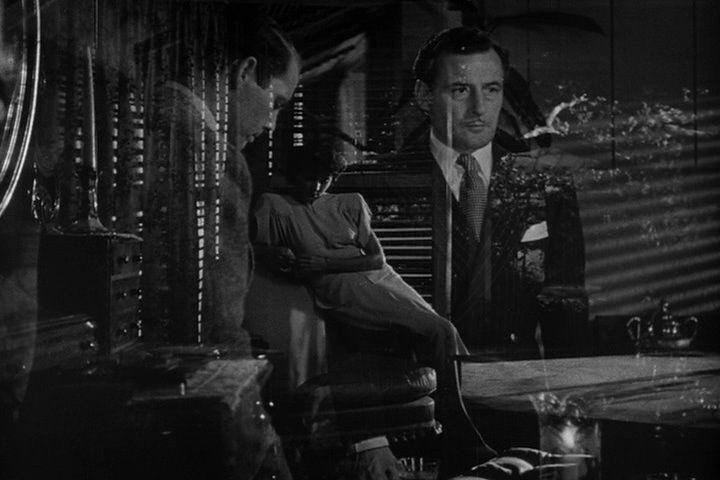
Fades is a gradual darkening or lightening of an image until it becomes black or white.
One shot will fade until only a black or white screen can be seen.
It is used to indicate the end of a particular section of time within the narrative. It can also show the passing of time.
In 'Citizen Kane,' there are good examples of fades, dissolves and straight cuts.
It starts off with the black screen and gradually fades into a sign that says 'No trespassing.' It then uses an unnoticeable straight cut from the differences of the gate, and then another one which fades into a medium shot of the gate, also showing part of the background, which is a castle. These shots are only in the first 30 seconds of the footage, not including the titles, which is quite effective because it grabs the audience's attention from the start.
Wipes is when one image is pushed off of the screen by another image. Images can be pushed left or right.
It is more common for the image to be pushed off the left-hand side as this movement is more consistent with the sense of time moving forward. Wipes are used to signal a movement between different locations that are experiencing the same time.
For example, wipes are used broadly in the 'Star Wars' films.
A jump cut is where the audience's attention is brought into focus on something very suddenly. This occurs by breaking the continuity editing, which is known as discontinuity.
It appears as if a section of the sequence has been removed.
In the film 'Breathless,' the gap in action (when Seberg picked up the mirror) is emphasised by the use of a jump cut. It is used to startle the viewer and draw attention to something.

The filmmaker can choose to place shots in a certain order so as to create a smooth visual transfer from one frame to the next.
When two consecutive shots are matched in the terms of the way they look this is called a graphic match.
In 'A Space Odyssey,' there is a graphic match shown from where the bone is thrown and turns into an object in space.
Montage editing contains many different images, quickly edited together. Images do not provide a sense of the narrative moving forward, but are still full of meaning.
Rapid cuts force the viewer to consider the connections between the images being shown. There may be no obvious connections or they might be deliberately unconnected.
They are often used to reflect chaos, tension or disturbance, a characters state of mind perhaps. They might have an overall thematic or visual connection.
In 'Team America: World Police,' there is a good example of a montage.
Continuity editing retains a sense of realistic chronology and generates the feeling that time is moving forward.
It may use flashbacks or flash forwards but the narrative will still be seen to be progressing forward in an expected or realistic way.
Eye line match is when we see a character looking at something off screen and then we cut to a shot of what they are looking at.
Match on action is when we see a character start an action in one shot and then we see them continue it in the next shot.


The 180 degree rule is a basic guideline that states that two characters (or other elements) in the same scene should always have the same left/right relationship to each other.
If the camera passes over the imaginary axis connecting the two subjects, it is called crossing the line.

Shot/Reverse shot is used to show conversations/arguments.

There are two key areas to focus on with editing:
1. Speed of Editing- How long does each shot last?
2. Style of Editing- How each shot is joined to the next?
Speed of editing
In a film, each scene may last a few seconds, or it could continue for minutes, but the length of each sequence establishes the pace of the film moving the action along.
The speed of editing will help to figure out the mood of what is taking place on screen.
If the audience is to feel suspense and anxiety, the editing will be quick- the shots/scenes changing frequently. For example, in an action sequence.
In 'The Bourne Ultimatum,' the editing is very quick to try and keep up with all of the action taking place. This creates a tension/suspense throughout the scene to grab the audience's attention and capture all the action involved.
In 'James Bond- Quantum of Solace,' there is a slight contrast for it starts off slow and then gets faster when the fight scene shows, and once the fight is over, it returns to slow again.
A trailer for a film needs to pack in detail from throughout the film. Therefore the editing will be very fast.
In the 'Man in the iron mask,' there were 140 shots, give or take, throughout the trailer.
Scenes at the beginning of a film should be slower to introduce the main characters.
As the film progresses, scenes may become shorter as the editing cuts between two or more storylines at a time.
Style of Editing
This is how shots are linked together.
The movement from one shot to another is called a transition. Straight cut is the most common and "invisible" form of transition.
One shot moves instantaneously to the next without attracting the audience's attention.
Straight cuts help retain reality. they do not break the viewers suspension or disbelief.
Dissolves is fading one shot off the screen while another shot is fading in.
the audience will be able to see both scenes as the midpoint dissolves.
It is used if the film maker wants to show a connection between two characters, places or objects.
Fades is a gradual darkening or lightening of an image until it becomes black or white.
One shot will fade until only a black or white screen can be seen.
It is used to indicate the end of a particular section of time within the narrative. It can also show the passing of time.
In 'Citizen Kane,' there are good examples of fades, dissolves and straight cuts.
Wipes is when one image is pushed off of the screen by another image. Images can be pushed left or right.
It is more common for the image to be pushed off the left-hand side as this movement is more consistent with the sense of time moving forward. Wipes are used to signal a movement between different locations that are experiencing the same time.
For example, wipes are used broadly in the 'Star Wars' films.
A jump cut is where the audience's attention is brought into focus on something very suddenly. This occurs by breaking the continuity editing, which is known as discontinuity.
It appears as if a section of the sequence has been removed.
In the film 'Breathless,' the gap in action (when Seberg picked up the mirror) is emphasised by the use of a jump cut. It is used to startle the viewer and draw attention to something.
The filmmaker can choose to place shots in a certain order so as to create a smooth visual transfer from one frame to the next.
When two consecutive shots are matched in the terms of the way they look this is called a graphic match.
In 'A Space Odyssey,' there is a graphic match shown from where the bone is thrown and turns into an object in space.
Montage editing contains many different images, quickly edited together. Images do not provide a sense of the narrative moving forward, but are still full of meaning.
Rapid cuts force the viewer to consider the connections between the images being shown. There may be no obvious connections or they might be deliberately unconnected.
They are often used to reflect chaos, tension or disturbance, a characters state of mind perhaps. They might have an overall thematic or visual connection.
In 'Team America: World Police,' there is a good example of a montage.
It may use flashbacks or flash forwards but the narrative will still be seen to be progressing forward in an expected or realistic way.
Eye line match is when we see a character looking at something off screen and then we cut to a shot of what they are looking at.
Match on action is when we see a character start an action in one shot and then we see them continue it in the next shot.
The 180 degree rule is a basic guideline that states that two characters (or other elements) in the same scene should always have the same left/right relationship to each other.
If the camera passes over the imaginary axis connecting the two subjects, it is called crossing the line.
Shot/Reverse shot is used to show conversations/arguments.
Monday, 3 February 2014
Opening Sequence Titles
There are numerous titles that are at the start of every movie. They include:
- Ident - Production company (Galaxy Productions)
- Production company Presents (Galaxy Productions Presents)
- A film by - Director (Ropa)
- Male Actor (Chris Sullivan)
- Female Actor (Kamie)
- Title (Hunter)
- With... (other actors) (Sam Fuller)
- Editor (Kamie
- Music, Cinematography, Screenplay (Kamie, Ropa, Georgia)
- Producer (Kamie)
- Director (Ropa)
Research into title sequences
Title sequences are very important for the opening of films for they present who is starring in the movie, who the production/distribution companies are and the makers of the movie, such as the director and the editor.
After the name of the film appears on the screen, the music turns into thrilling and exciting music, which anticipates a chase or action of some sort.
Friday, 24 January 2014
Animatic
This is the animatic of our storyboard for my thriller. It shows all of the scenes which we used for our thriller.
Monday, 20 January 2014
Filming Day 1
We filmed our thriller in one day. It took roughly 2 hours, and the weather was nice, the sky was slightly dark and gloomy but that fit in with our thriller. We managed to finish our thriller in 1 day of filming for we started early and everyone cooperated, there was minimal mistakes and when there were they were easily sorted out. We were careful and accurate when we filmed and we made sure that we had enough footage.
Whilst filming, we took some behind the scenes images.


Whilst filming, we took some behind the scenes images.
Friday, 10 January 2014
Titles
There are many titles that are featured at the start of every movie. They include:
1. Ident-Production company (Galaxy Productions)
2. Production company presents (Galaxy Productions Presents)
3. A film by - Director (Ropa)
4. Male Actor (Chris Sullivan)
5. Female Actor (Kamie)
6. With... (other actors)
7. Editor, Cinematography, Music, Screenplay (Kamie, Georgia, Ropa)
8. Producer (Kamie)
9. Director (Ropa)
10. Title (Hunter)
1. Ident-Production company (Galaxy Productions)
2. Production company presents (Galaxy Productions Presents)
3. A film by - Director (Ropa)
4. Male Actor (Chris Sullivan)
5. Female Actor (Kamie)
6. With... (other actors)
7. Editor, Cinematography, Music, Screenplay (Kamie, Georgia, Ropa)
8. Producer (Kamie)
9. Director (Ropa)
10. Title (Hunter)
Subscribe to:
Posts (Atom)